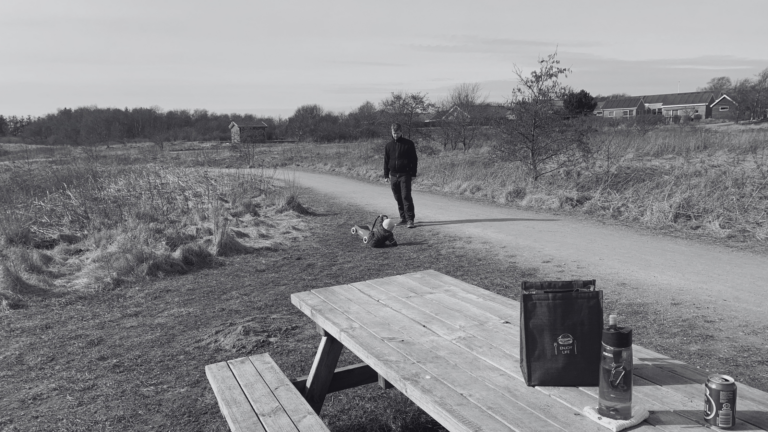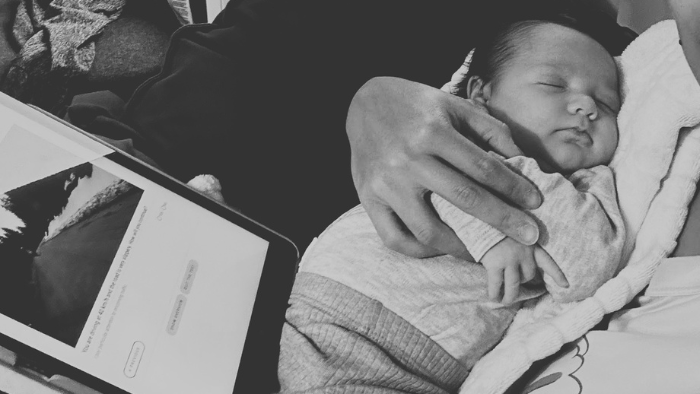

We left Denmark to live on an island in the Philippines, where power outages, water supply issues, and ant infestations — among other things — are as common as the sun shining almost every day.
In January 2025, we came for what was supposed to be a two-month vacation to the Philippines. But here I am, still in the Philippines with my Danish husband and three small kids in Oriental Mindoro, writing this after a three-hour brownout, almost 24 hours without Wi-Fi, and discovering that our water supply — manually igib from a free-flowing source — had algae. In the middle of the heat (and everything else I could complain about), I was ranting to Martin, my husband, that maybe we should move back to Denmark. That a life where basic necessities are unavailable is not acceptable.
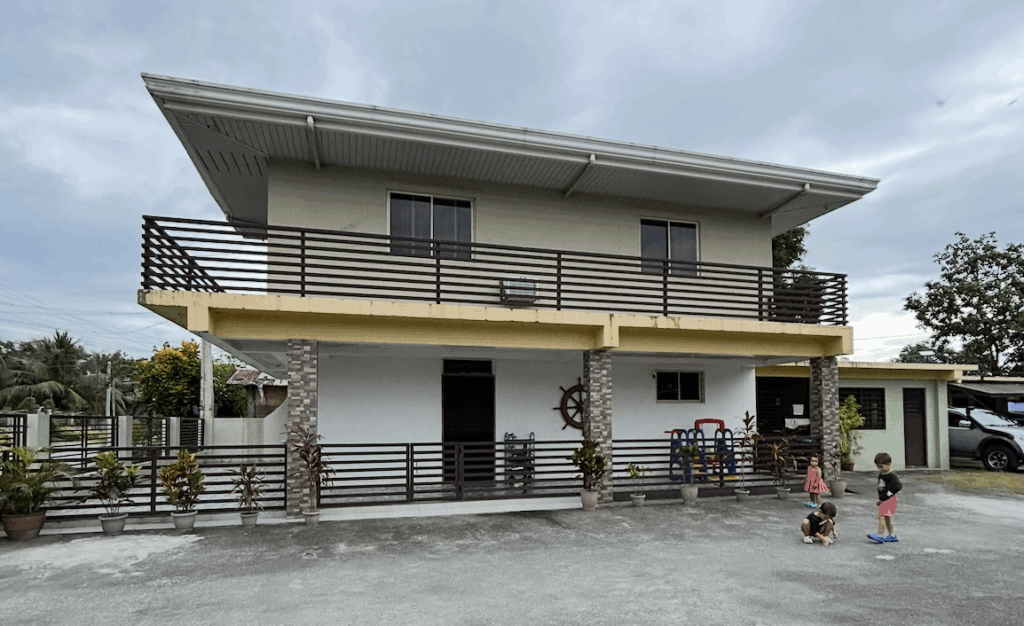
Our kids adjusting to provincial life.
It got me thinking: what is life supposed to look like, at the bare minimum, for someone to be happy and content?
We moved to Denmark in 2020 after giving up on the constraints of the COVID pandemic. In Denmark, we had a good life — just like anyone would in a first-world country. Here, words like “brownout” don’t exist, and issues like Wi-Fi and water supply are irrelevant.
But I wasn’t genuinely happy there either.
Happiness and contentment don’t exist in a place — not in the country you live in, not in clean water, not in stable internet. It’s always rooted within you. When life strips you down, you deal with things like intermittent electricity, water supply issues, and traffic.
When you have everything, you still find something to be unhappy about — in Denmark, it was the lack of sunshine, the cold, the wind, and the language I couldn’t master. It’s a never-ending pit of discontent, wherever you are, whatever you have.
So moving back to Denmark wouldn’t solve my problems. Finding a better housing solution wouldn’t either. But I still want to rant — because that’s all I can do right now while I try to find the inner peace that will actually solve my problems.
Anyway, back to the real topic of this blog —
I had our family leave Denmark to move to the Philippines just to teach my kids Tagalog. And I realized — it’s not a “just.” It’s my Filipino kids’ basic right to learn their own language and their own culture. I was simply a few years late in realizing it.
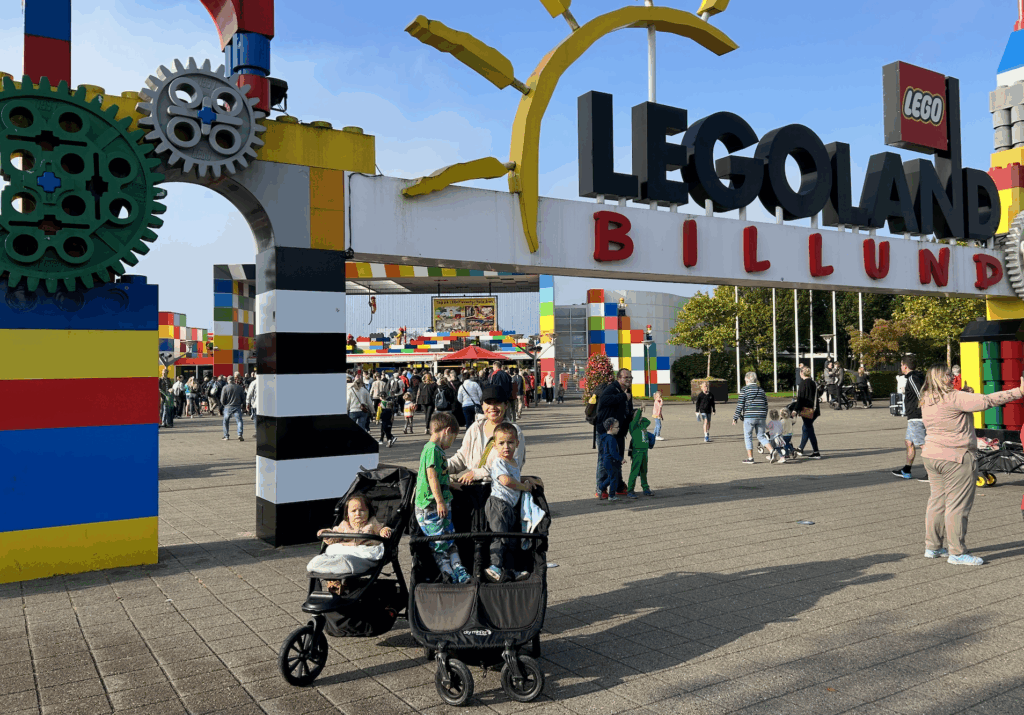
What a gift it is to be a half-Danish, half-Filipino family — you truly get the best of both worlds.
Backstory
In January 2025, I booked an Italki session (an online platform to learn a language) with a Danish tutor of Chinese descent. She was new to the platform and charged less, so I booked her. In our first session, with her native Danish accent, she told me she was living in China to learn Chinese. Her Chinese mom, in her goal to integrate into Danish society, never spoke Chinese to her growing up. I asked if her mom ever became near-native in Danish, and she said no — but she spoke it well enough.
And I thought to myself: It wasn’t worth it, was it?
Her mother didn’t pass on her native language, and now her daughter is spending years learning it as an adult. That moment hit me hard. All the emptiness I’d felt since moving back to Denmark suddenly made sense. And the timing couldn’t have been more perfect.
I was that Chinese mom. Wanting to integrate and fit in — at the expense of my own heritage. We were raising Danish kids, not half-Danish, half-Filipino kids. We ate Danish food; I rarely cooked Filipino dishes because I thought they were too unhealthy or tedious. I spoke in broken Danish to my kids, never fully able to express myself. When I want to call their attention, I want to be able to say from my lungs, Hoy!
When the kids are fighting, I want to say, “Sabi nang huwag, eh!” or “Gusto mo mahampas ng tsinelas? Char.” So many expressions of motherhood are left unexpressed because I’ve been speaking in a language that isn’t truly mine.
It didn’t occur to me until then that I wasn’t really communicating with them — and never could — unless I spoke the language of my heart, and they understood it too. The language of their heritage, my heritage- Tagalog.
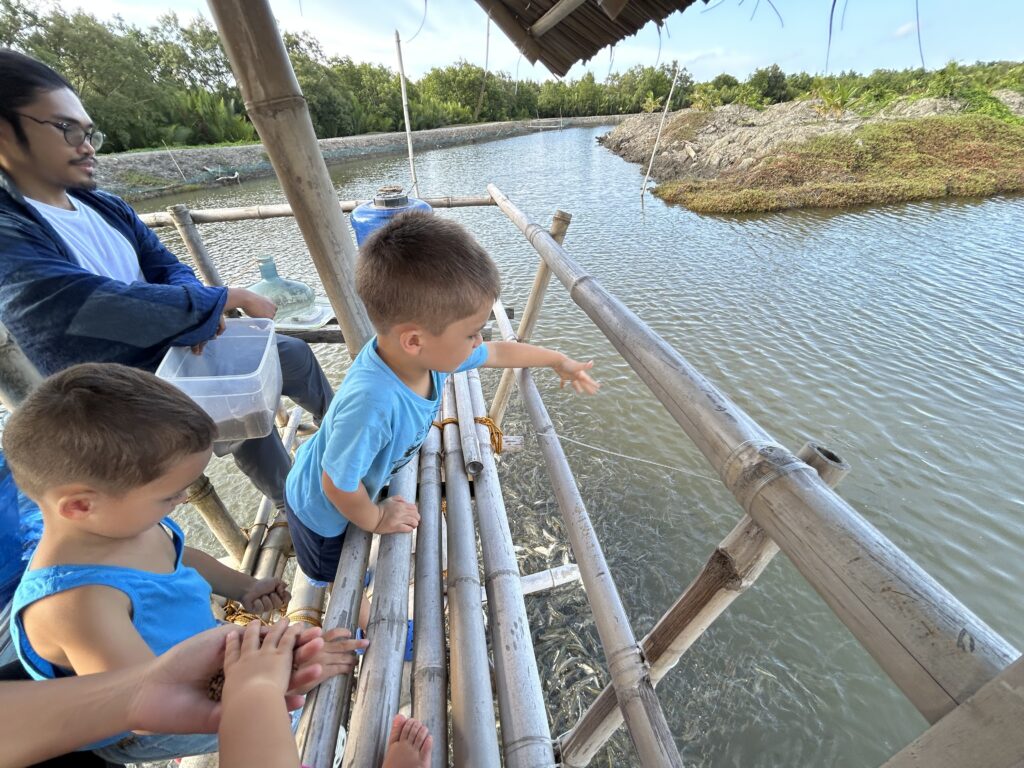
Fish feeding at Tito Toot’s Farm. We’re (almost) neighbors with my youngest brother, who runs a fish farm — much to the delight of my kids.
Another realization came from watching how my husband is treated when he visits the Philippines. Even after over 10 years together, he speaks only a few Tagalog words. And I thought, even if he learned as an adult, he’d still always be an outsider. Learning a language is one thing, but learning it as a child — along with the culture, the unspoken rules, the humor, the love for videoke imprinted on you from birth, the love for taho, eating with your hands, Jollibee, and even the acceptance of balut — that’s what makes it a part of you. Not teaching my kids Tagalog was robbing them of the right to be true Filipinos, to feel at home in their own country.
Right then and there, I told my husband I was going all-in on teaching our kids Tagalog and Filipino culture. He was supportive, as always. He even said, “I told you before we should do a Filipino Christmas, but you kept refusing.”
And again, I asked myself — why?
I think it boils down to a cultural mentality. Filipinos, known as the world’s biggest supplier of overseas workers, are used to adapting — learning foreign languages, taking care of others before ourselves. We carry the po and opo culture abroad, but we don’t take a solid stand for our own.
I saw this in Denmark among Filipino moms who only spoke Danish to their kids. Meanwhile, my non-Filipino mommy friends were proudly raising bilingual kids — Danish and Russian, Danish and French, Danish and English — but never Danish and Tagalog. And it’s not just about language. It’s about the belief that everything foreign is better. Imported things are “superior.” Our own is always second or third…
I carried that mindset myself — that in a first-world country, we should be the ones adapting, adjusting, and prioritizing their language, even if it’s not our own. That our language has less value.
Isn’t that pathetic? And wrong in every possible way?
It took me a while to realize it, but now I want to change it — starting with my own kids. Even if it’s years late. Even if it means pulling them out of their Danish life and putting them in a house with brownouts, water supply issues, and mosquitoes. After all, it’s a full Philippine cultural immersion — a true Filipino challenge, a reflection of what this country has, for better or worse.

Who could resist an ihaw-ihaw? Isaw and Betamax for Nanay, hotdog for the kids, and Barbecue for Far (dad) 😄
When I told Martin I wanted to stay in the Philippines for a year and not go back, it wasn’t planned. He was hesitant and disappointed, but I stood my ground. And I’m glad I did, because he eventually understood — not just to please me, but because he saw what we’d be robbing our kids of if we didn’t make this choice. He felt what I felt. He saw what I saw when I asked him to reflect:
“In the 15 years you’ve been coming in and out of the Philippines, have you ever felt like a local?”
“No. Never.”
“You will always be a foreigner and feel like one. I don’t want our kids to feel that.”
Our kids have just as much right to be Filipino as they do to be Danish.
We didn’t take that return ticket in March. Instead, he went back to Denmark alone to put our things in a container. It was unplanned and (we’ve been told) irresponsible — but it’s a decision I’ll never regret. I say that with certainty because throughout this whole ordeal, I kept asking myself: In 10 years, will I regret this decision? And every time, the answer was no.
Years from now, I’ll tell this story to my kids in Tagalog — how I fought for them to learn their language. And am I competing with their Danish roots? Absolutely not. I embraced that for years, maybe even too much. I was that competitive mom who wanted to be good at Danish, to integrate — not realizing it came at the expense of passing on my own heritage.
Unfortunately, in the Philippines, most parents give preference to English. Kids grow up weak in their native language, and many parents are even proud of it — proud their kids speak English fluently with broken Tagalog on the side. I’m not talking down to these parents — many are my close friends. I do encourage them to teach their kids Tagalog, but I respect their choice. They live in the Philippines, so their kids will always have better exposure than mine.
Because of this mindset, it was also hard to find a school that would give my kids real Tagalog exposure. Even here in the province, English is often the main medium, but Tagalog is still more widely spoken than in Metro Manila. Luckily, we had the option to move here to the province — and for free. My dad’s house has been standing here with four rooms, making it perfect for our family. We just needed to clear out the insects and parasites, and we were all set. Plus, we can borrow their extra car, keeping our expenses minimal. Brownouts and quirks of provincial life aside, it still feels like the universe is working in our favor.
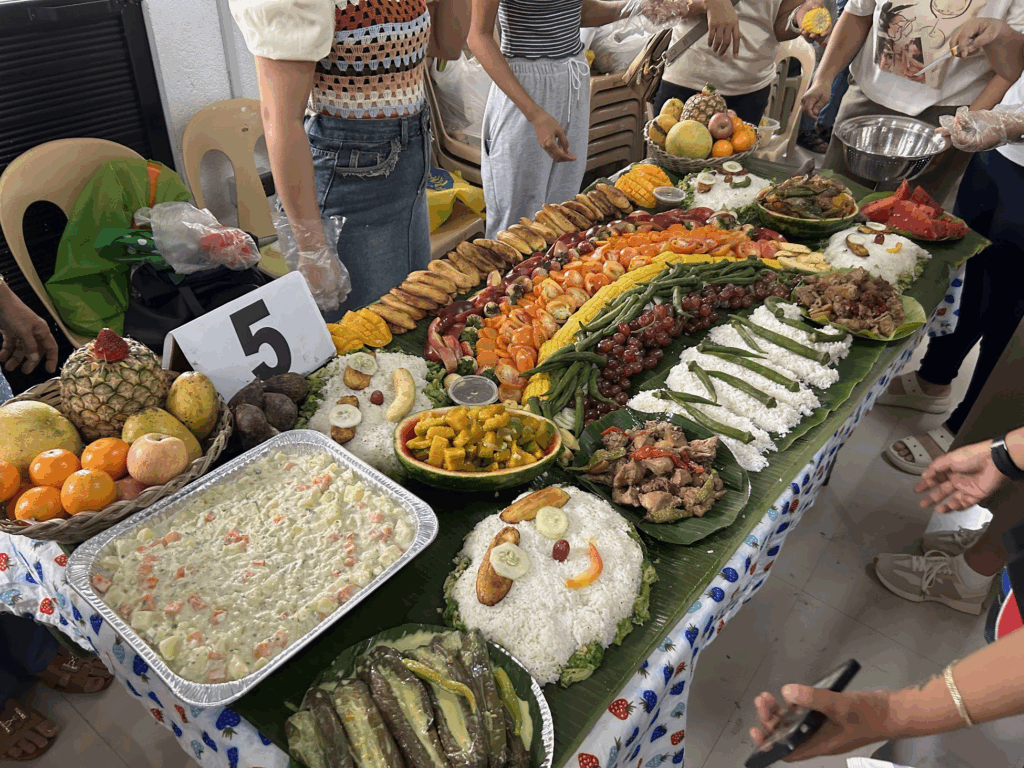
One of the many activities at Marius’ school — a healthy and appetizing-looking boodle fight prepared for the Nutrition Month celebration.
We found a school I can’t say I loved — too focused on academics, unhealthy snacks here and there, and a bunch of other things I’d rather change. But I keep reminding myself: Tagalog and culture. That’s what you’re here for. And maybe, in a way, they get that cultural immersion despite my preferences.
Unlike English, Spanish, or other widely known languages, there are few engaging Tagalog learning materials for children. Many nursery rhymes sound outdated and boring. But I was lucky to find some that my kids liked like Doraemon and those made from Filipino animators. At one point, I even thought about creating my own YouTube channel to teach Tagalog — but meeeh. I hope someone else does it though.
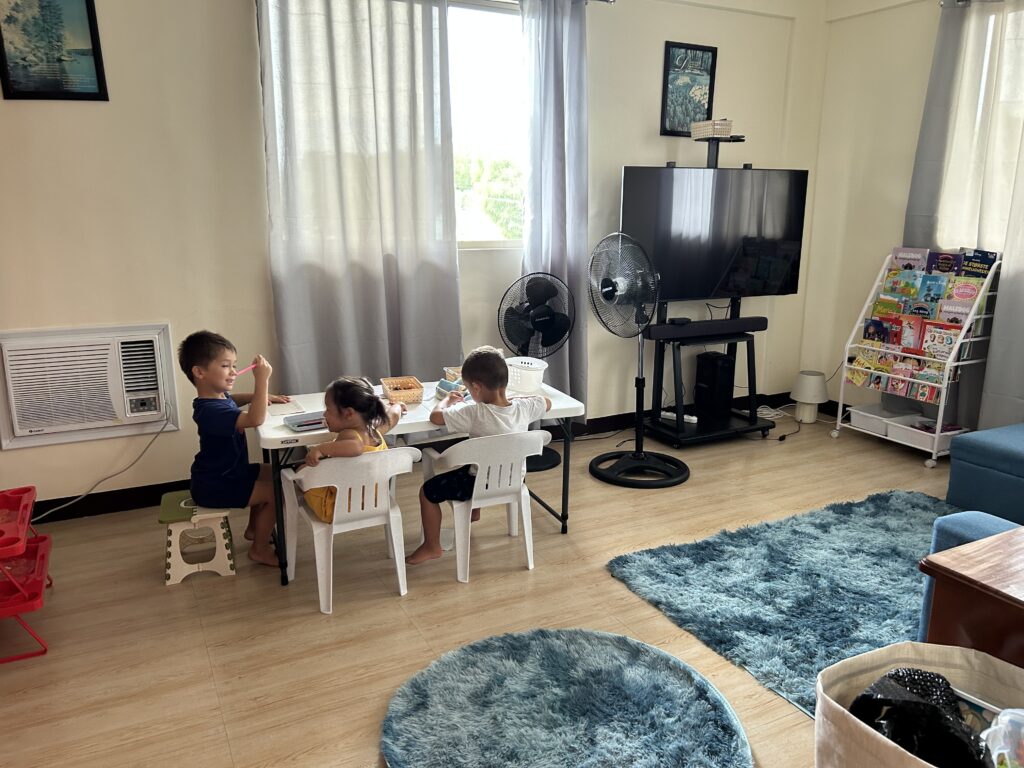
The kids love to draw and color so we do this every single day
Today, my kids still respond in Danish, but I speak to them only in Tagalog. They understand 90% of what I say. They speak in short phrases, with a shy smile. They don’t speak at all in school yet, but I’ve researched that this “silent stage” is normal. At the same time, they’re starting to speak more Tagalog at home — to me and to our Tagalog-speaking community here.
Am I depriving my kids of their first-world “rights” by bringing them here? Maybe. But it’s only for a year — they’ll survive. They also need to learn that life doesn’t always come easy, and to truly appreciate living in a country like Denmark, they need to experience life in the Philippines. With the cold comes comfort; with the sun comes challenge. More than that, it’s part of experiencing and embracing their heritage.
It takes patience, but it’s worth it, because they’re not just learning a language — they’re learning how to be true Filipinos.